The one-person shop
Hi — I'm Bryce.
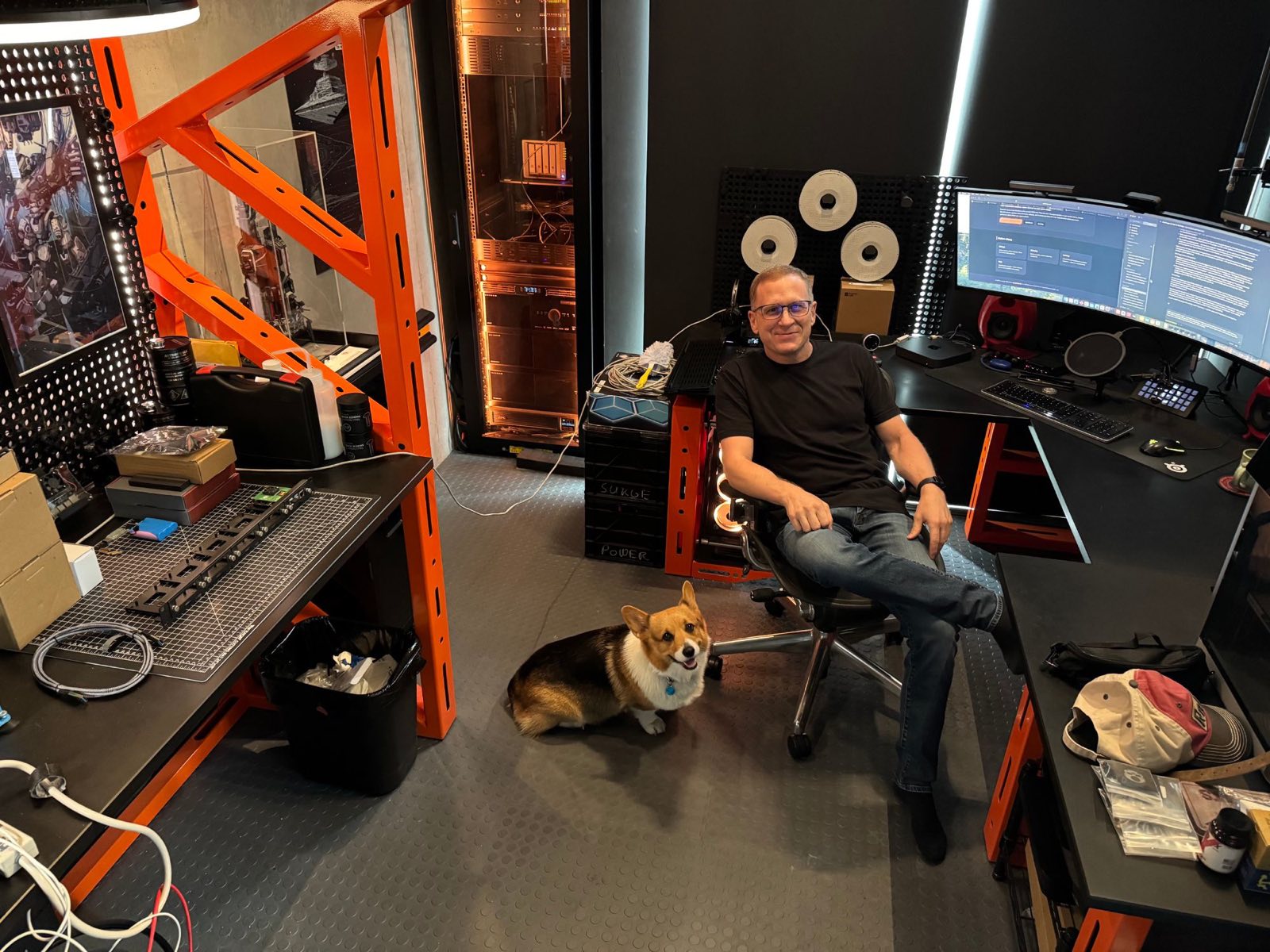
geekdojo is one person: me, a workbench, a server rack, and a corgi named MoneyPenny. I build Rasputin and Human System: software for managing your own infrastructure and bringing your health records together.
The short version
I've been building software — and the infrastructure underneath it — since the late '90s. By day I'm a Distinguished Engineer at a Fortune-5 enterprise, where I lead a cloud enablement dojo for an engineering organization of roughly 50,000 people: the team that turns proven cloud architecture, networking, security, and PKI patterns into training, pipelines, and templates an org that size can actually use.
Along the way I've cofounded an angel-funded startup, grown a development org from under twenty engineers to over sixty while its platform serviced billions in loans per quarter, been through the patent process (US20040024888A1) - and decided it wasn't for me, and built out software solutions for every need under the sun. Most of that work happened under compliance regimes — HIPAA, HITRUST, SOC 2 — where "it usually works" doesn't ship.
None of that makes Rasputin good. The devlog and the repos have to earn that on their own. What it should tell you is that the one person behind this has shipped and operated production infrastructure for a long time, and knows what it takes to keep it running.
The workshop
Rasputin is developed against real hardware on that bench: a 24-node Raspberry Pi bench cluster, a stack of Intel N100 boxes, the x86 firewall reference hardware, and the 3D printer that keeps producing brackets for all of it. Every Rasputin release boots here before it's published — flash, boot, dashboard, apps — because "works in the first hour" is a claim you can only make by doing it, repeatedly, on the gear people actually own.
How I build — including the AI part
I build with AI agents, and I don't hide it. One person ships a cluster OS, a control plane, and a firewall image at this pace by pairing a lot of experience with a lot of automation — and by keeping the human accountable for every line that lands.
What that means in practice for Rasputin: I review what merges, releases are signed and checksummed, every image is flashed and booted on the bench before it ships, and when something is wrong I write it up in public — including the time my own SSH key was baked into every published image, found, disclosed, and fixed within a day.
If AI-assisted engineering makes you skeptical, good — it should be judged by its output. The devlog exists so you can.
Why "geekdojo"
Geeks learning geek things. I've run the shop under this name since 2020. Today that workshop produces two products: Rasputin for managing your own infrastructure, and Human System for organizing your personal health record. Both start with the same principle: build practical tools that put the person using them in control.